
Hyperscale Data Center Growth is Pushing the Power Industry to the Limit16 min read

The rapid expansion of hyperscale data centers is driving a surge in energy demand. Analyst firm Industrial Info Resources (IIR) has conducted a study on the growth of data centers and associated power trends. The U.S. alone has $2.4 trillion of new AI data center development in play right now. More than 70 projects are over 1 GW in size. For context, 1 GW can power up to a million homes. In total, 296 GW of data center growth is planned in the U.S.
This is largely driven by hyperscale data center operators such as Google, Amazon, Meta, and Microsoft, along with a growing number of data center developers. They are building a new generation of facilities packed with advanced processing capabilities. Globally, more than $100 billion per month in new AI data center projects has been announced over the past year, with some months reaching as high as $350 billion.
“These are tangible projects and only 10% to 20% might fall by the wayside due to financing, regulatory, permitting, or local opposition reasons,” said Shane Mullins, an analyst at IIR. “About 4,300 of a total of 7,250 data center projects worldwide will begin construction in the next 18 months.”
All Forms of Generation
Power availability is the biggest barrier to these data centers coming to fruition. The grid cannot meet this level of demand. As a result, many developers are bringing their own power. Much of the available gas turbine capacity has already been reserved through the end of the decade. In response, manufacturers such as GE Vernova, Siemens Energy, and Mitsubishi Power have announced plans to expand capacity, add shifts, and strengthen supply chains. Even so, supply remains constrained.
All forms of generation are being evaluated to power data centers. Nuclear energy is gaining renewed attention, with facilities such as Palisades Nuclear Plant being restarted. Small modular reactors (SMRs) are also receiving increased funding. Gas and diesel engines remain in high demand. Battery Energy Storage Systems (BESS) are another widely adopted option, often paired with solar to provide more consistent power. Meanwhile, Tesla continues to expand its role in the data center market through battery deployments.
“With utilities telling data center developers that any requests for power over 500 MW will likely have to wait until the 2032/33 timeframe, the build-your-own-power concept has become a necessity for many projects,” said Britt Burt, Senior Vice President of Research for the Power Industry at IIR. “This is driving hyperscalers and others to partner with power and construction specialists to move projects through to completion.”
U.S. Power Boom
According to IIR, U.S. electricity demand was 42 GW at the end of 2025, with another 23 GW under construction. The firm predicts demand could exceed 90 GW by 2030.
Texas is the most active market, driven by abundant natural gas, a robust pipeline network, a simplified regulatory environment, relatively lower electricity costs, strong fiber connectivity, and available land. Texas leads AI data center investment with $517 billion in announced project value. Virginia follows at $344 billion, then Georgia at $217 billion, Missouri at $121 billion, and Arizona at $102 billion. Pennsylvania, Illinois, and Ohio follow, each with $60 billion to $90 billion in planned investment.
“The continued increase in project announcements shows that the pace of AI data center development is accelerating,” said Mullins. “It indicates a structural, multi-year trend in digital infrastructure buildout that is expected to continue.”
Implications for Power and Cooling Infrastructure
This level of growth is driving sustained demand across the data center supply chain. Air handling units, ducting, containment systems, blanking panels, floor tiles, grommets, and liquid cooling technologies will all play a role in supporting higher-density environments. Similarly, power infrastructure such as PDUs, transformers, and UPS systems will be critical to enabling reliable operation at scale.
Setting the standard for rack power reliability.
With automated soldering from line input to each receptacle,
PowerLok® eliminates all mechanical connections, making it 270%
less likely to fail than rack PDUs with mechanical terminations.
Setting the standard for rack power reliability.
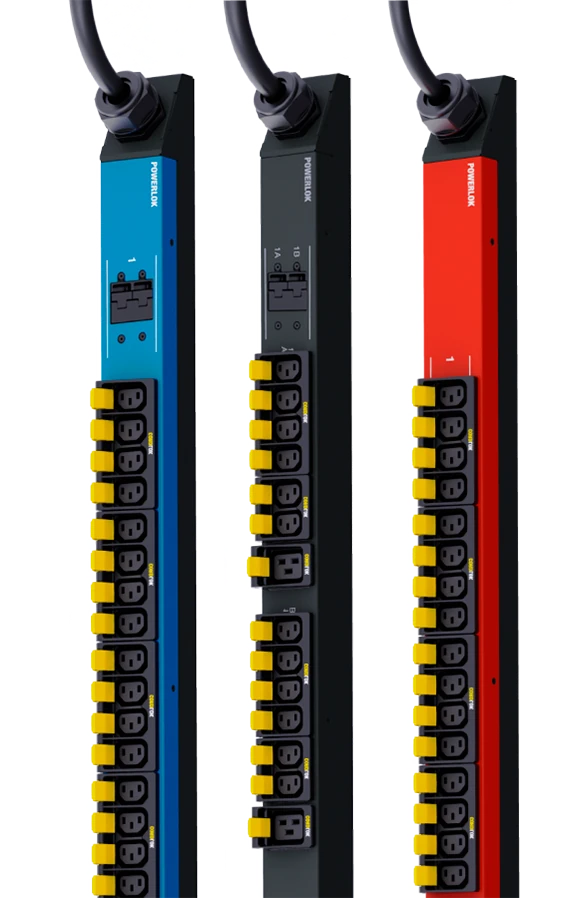 With automated soldering from line input to each receptacle,
PowerLok® eliminates all mechanical connections, making it 270%
less likely to fail than rack PDUs with mechanical terminations.

Drew Robb
Writing and Editing Consultant and Contractor
0 Comments