
How Enterprise IT Can Achieve Water Sustainability Despite the Demands of AI23 min read
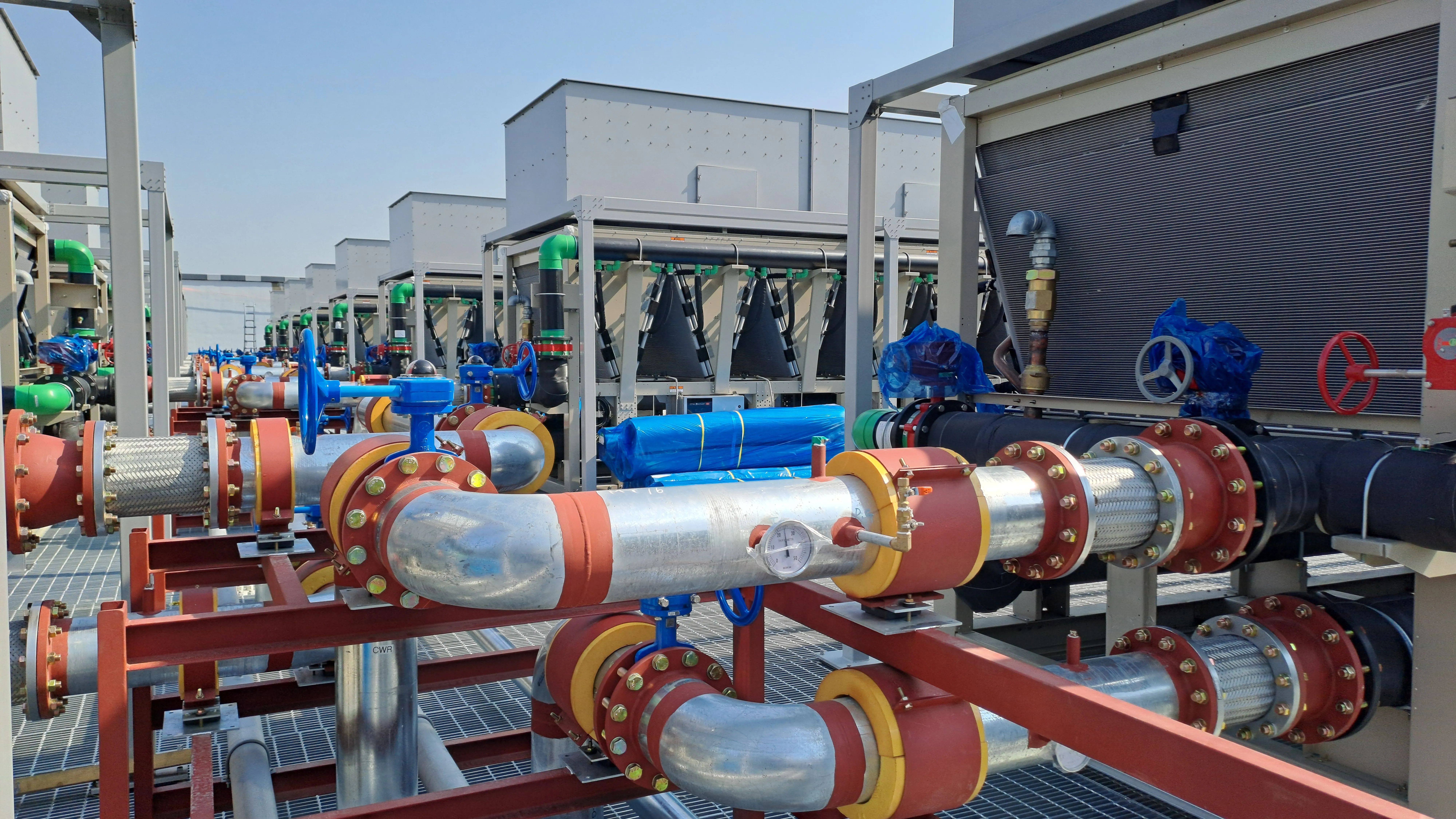
Most of the discussion about data center sustainability is focused on the type of power and how much of it is consumed. But excessive water usage is becoming an increasingly important and controversial aspect of data center operations. Many data centers use a lot of water in cooling and humidification. Hyperscalers, in particular, are under severe pressure from environmental groups due to their heavy usage of valuable water resources and the fact that their water consumption has expanded sharply due to the needs of AI. This article explains the many issues surrounding water usage, its role in data center sustainability, and what should be done about it.
Sustainability in IT and Data Centers
Sustainability has been a central concept of data center operations for more than a decade. During that time, the bulk of attention has been given to power consumption. Data centers are typically judged on their power usage effectiveness (PUE) numbers. The closer the PUE is to 1, the more efficiently a data center uses electricity. Recycling is another area where data centers have been encouraged to be more responsible. Most data centers have responded well by instituting component and equipment recycling programs.
But a new sustainability kid is in town: water consumption. Those data centers that neglect to implement sound water management best practices are likely to find themselves in hot water with their local communities, regulators, environmental bodies, and the press.
How Data Centers Consume Water
The issue of water availability is a global concern. Droughts are commonplace in many regions. Water tables are diminishing in highly populated and heavily farmed areas. Cities, U.S. states, and neighboring nations are in conflict over water rights in some parts of the world. The mighty Colorado River that carved the Grand Canyon, for example, is reduced to a stream by the time it reaches the Gulf of California near the U.S./Mexico border. Yet some of the states that the mighty river runs through (Arizona, Nevada, and California) all want more of its water, not less. Hence, water has become a growing concern, and that has led to the spotlight shining on IT.
“Water quality, scarcity, and flooding are becoming more widespread, and this is starting to impact data centers,” said Autumn Stanish, Senior Principal Analyst for IT Sustainability at Gartner. “Water stress is expected to increase as global temperatures continue to rise.”
Data centers consume water in many ways. It is used in server-level cooling, for example. With liquid cooling becoming more important due to the heat output of modern servers and processors, water plays an increasingly important role in data center cooling systems. Water is also used to transfer heat from servers to the facility’s cooling infrastructure through heat exchangers.
Remember, too, that many buildings use water to support cooling and air conditioning. The cooling towers used by many facilities lose a lot of water due to evaporation. Further, power generation can consume substantial amounts of water for cooling and other processes. All of this tends to point the finger at data centers. If power is so scarce, emissions are so high, and water availability is so limited, why are data centers being allowed to be so cavalier with these precious resources?
How Thirsty Is AI?
Each time a user asks a question of ChatGPT, about 0.0029 kWh are consumed, according to the Electric Power Research Institute (EPRI). This equates to about ten times the energy needed for a Google search (0.0003 kWh per query). With hundreds of millions of users, that’s a lot of electricity. Roughly speaking, the math works out that ChatGPT might have used close to half a billion kWh of power dealing with over a hundred billion prompts.
How about water? The large language model training done in data centers is particularly thirsty. Training one LLM can require 10 gigawatt-hours of power and 700,000 liters of freshwater. Once trained, these AI systems are subjected to endless queries and prompts. Estimates of water consumption by ChatGPT suggest that between 10 and 50 responses can consume 500 ml of water, according to Shaolei Ren, Associate Professor of Electrical and Computer Engineering at the University of California at Riverside. Factor in more than a hundred billion prompts, and you are looking at more than a billion liters of water consumed by new AI applications alone.
How Much Water Is Being Consumed by Data Centers?
AI has exposed the limitations of existing power grid management, and it is doing the same for water. One study ranked data centers among the top 10 water-consuming commercial industries in the USA. The average per data center is about 18,000 gallons of water per day or 6.57 million gallons per year. Hyperscale data centers consume far more. Google’s annual water consumption reached 3.3 billion gallons in the U.S. and nearly 1 billion more globally in one year. Facebook uses about 4.1 million gallons of water annually at its Prineville campus in Oregon, spanning 333,400 sq. ft.
These companies are working hard to lower their water usage and be more responsible. But AI is making those efforts more challenging. Microsoft’s data center water use increased by 34% in one year to 1.7 billion gallons. Google experienced a 20% spike.
“The expansion of AI products and services is leading to an increase in data center workloads and the associated water footprint required to cool them efficiently,” said Ren. “In 2023, our data centers consumed 6.1 billion gallons of water 17% more water than the previous year, mirroring similar growth in electricity use.”
Regulatory and Community Pushback on AI Water Consumption
As AI demands for water and power continue to rise, there is a strong counterflow emerging from regulators, communities, and environmental groups seeking to monitor and curtail data center water consumption. U.S. states like California are imposing climate-related disclosure requirements that can affect data center operators. The EU has issued a Climate Neutral Data Centre Pact with the goal of climate neutrality by 2030, including commitments related to water conservation.
Meanwhile, internal pressure is mounting, courtesy of environmental, social, and governance (ESG) initiatives. ESG is one of the reasons hyperscalers are revealing their substantial rates of water consumption. Even lenders are getting involved, sometimes choosing to lend only to those data centers that can demonstrate environmental responsibility. Netrality Data Centers, for example, secured a $380 million sustainability-linked credit facility (SLL). The financing is tied to sustainability performance targets, with progress measured against annual goals.
How Data Centers Can Achieve Water Sustainability
There are many things data centers can do to achieve water sustainability. They include:
Monitoring Water Consumption: As less than a third of data centers measure their water consumption, an important first step is to begin measuring and monitoring it. You can’t manage what you can’t measure.
Audit Consumption: Data center managers should conduct an audit of water usage to identify areas of excessive consumption and immediately address those that are the simplest and cheapest to fix. This might include raising the temperature of chilled water, replacing inefficient chillers, and raising data center temperature set points to lower cooling demands, where operating conditions allow.
Transparency: The hyperscalers have gone public with their numbers. Other data centers are gradually following suit. Those resisting these efforts may eventually face regulatory and public relations challenges. The best policy is transparency. Instead of hiding the numbers, engage with the local community on efforts to lower consumption and achieve water sustainability.
Reduce Reliance on Toxic Chemicals: Data centers commonly use water treatment chemicals to control pathogens, corrosion, and scaling in cooling systems. While these treatments serve important operational and safety purposes, facilities should evaluate less hazardous alternatives where practical without compromising water quality or system reliability.
Digitize: As part of measurement, monitoring, and general efficiency, data centers should adopt digital technologies such as Data Center Infrastructure Management (DCIM) and cooling and water management systems.
Education: Attend industry events, join associations, and take part in initiatives aimed at promoting water sustainability in data centers.
Support Water Consumption Standards: PUE has been effective in driving attention to power efficiency. Water Usage Effectiveness (WUE), introduced by The Green Grid, provides an established metric for measuring data center water consumption. However, its adoption and consistent reporting across the industry are still evolving.
Recycle: Some data centers are engaged in water recycling and rainwater collection. The switch from potable water to recycled water, seawater, or rainwater collection, where practical, is an important part of water sustainability. “We have all but eliminated potable water usage for data center cooling the past few years,” said Jason Hick, Advanced Simulation & Computing Facilities, Operations and User Support Program Director at Los Alamos National Laboratory (LANL). His facility uses non-potable water to cool its supercomputers.
Plan New Data Centers Carefully: Anyone planning to add a new data center should take care in selecting its location. A hot, dry area may require significant cooling in a region where water availability is already constrained. A cooler climate with adequate water resources may offer advantages, depending on the cooling technologies used. The Green Grid’s Free Cooling maps provide useful guidance on data center placement.
“Strategically locating new data centers can significantly reduce their environmental footprint,” said Abu Bakar Siddik, a PhD candidate in the Civil & Environmental Engineering Department of Virginia Tech.
Stay Current with Innovation: There is a lot going on with cooling, chip design, and water sustainability. Data centers should stay up to date on developments. Areas to investigate include: ARPA-E’s COOLERCHIPS program, which aims to reduce cooling energy expenditure to less than 5% of a typical data center’s IT load for high-density computing; JetCool, which is developing cooling modules with an in-server radiator that eliminates server-dedicated air cooling to provide energy savings of 8–10%; and Nvidia, which is working on cooling efficiency and lowering processor temperatures on several fronts. One advanced cooling concept, for example, combines direct-to-chip cooling, pumped two-phase cooling, and single-phase immersion with a rack manifold containing built-in pumps and a liquid-vapor separator. The system uses a hermetically sealed chamber and environmentally preferable refrigerants.
Promote Water Sustainability Successes: Anyone making strides in water reduction should promote those achievements widely. Here is an example: Intel claimed net positive water use in the U.S., Costa Rica, and India as early as 2021. In that year, the company consumed 16 billion gallons of freshwater, reclaimed water, and desalinated water. Internal water management practices and Intel-funded water restoration projects resulted in more than 13 billion gallons of water being returned or restored to surrounding communities and watersheds. These included projects such as Arizona’s Verde River initiative, which incentivized farmers to switch from crops requiring heavy summer irrigation to barley, which is harvested earlier in the year and requires less water. Intel plans to achieve global water positivity by 2030.
Conclusion
Some regions of the world are wracked by severe droughts. Other areas are squabbling over limited river or groundwater resources. These issues are likely to worsen in the coming years. Water sustainability, therefore, cannot be ignored. The points listed above highlight opportunities to reduce water consumption and improve environmental stewardship.
Data centers are advised to get ahead of this issue now. Water reporting requirements and sustainability initiatives are evolving. Large customers may also request water consumption numbers and WUE figures as part of contract renewal negotiations. Data center operators, therefore, must give greater priority to water sustainability initiatives. But don’t look upon these measures solely as added costs. Water sustainability programs can also result in long-term cost savings while reducing environmental impact. There can be other benefits, too.
“75% of organizations will have implemented a data center infrastructure sustainability program driven by cost optimization and stakeholder pressures by 2027, up from less than 5% in 2022,” said Stanish. “Environmental impact shouldn’t be the only focus: sustainability can also have a significant positive impact on non-environmental factors, such as brand, innovation, resilience and attracting talent.”
The industry's easiest to install containment!
AisleLok® solutions are designed to enhance airflow management,
improve cooling efficiency and reduce energy costs.
The industry's easiest to install containment!
AisleLok® solutions are designed to enhance airflow management,
improve cooling efficiency and reduce energy costs.

Drew Robb
Writing and Editing Consultant and Contractor
0 Comments