
Five Ways to Get Around Data Center Power Bottlenecks17 min read

Data centers need more power, now, and they need a lot of it. Utilities don’t have it. Gas turbine manufacturers and nuclear developers say the pipeline for new generation is three to five years out. Those providing electrical infrastructure such as switches, transformers, capacitors, and substations also have long lead times. So, how are hyperscalers, data center developers, and AI-factory construction firms going to complete scores of GW-scale data center capacity each year in such a climate?
Here are five strategies being used to either get around supply-chain bottlenecks or shorten the construction timeline.
Find the Gas Turbine Sweet Spot
There is so much demand for gas turbines that some models can’t be delivered until the start of the next decade. This is especially true for the largest turbines, such as the H- and J-Class machines that offer 300 to 600 MW; the queue may be long. One way around this is to shop around:
- Check with Siemens Energy, GE Vernova, Mitsubishi Power, Ansaldo Energia, and Solar Turbines to see who is most flexible on delivery dates.
- Ask each of them what alternatives are available on a much shorter timeframe.
For example, their H-Class machines may be booked out for up to five years, but smaller turbines such as E- and F-Class units or lighter aeroderivative turbines might be more attainable. Additionally, companies like Dynamis Power Solutions, Vericor, OnPower, Gensystems, CTG, and Relevant Power offer mobile gas-turbine trailers in various sizes. A company called New APR even rents them. They can be transported onsite and installed within weeks in some cases.
Multiple Gas Engines and Packages
Gas engines are a lot smaller than turbines, but they have been steadily working their way up the power chain in recent years. Some of the latest models offer around 20 MW. Group 25 together and you have half a gigawatt. Companies like Wärtsilä Energy, Caterpillar, Cummins, and Rolls-Royce are all gearing up their supply chains to meet data center demand. They also offer shorter delivery times than the large turbine OEMs.
The gas-engine OEMs may or may not be backlogged. But there is an ecosystem of engine packagers who either already have engines onsite or maintain fast access to the supply chain due to long-term relationships. These companies package the engine with all components required for field operation, such as fuel-supply lines, filters, lubrication, cooling systems, trailers, and more.
VoltaGrid, for example, bought a large number of Jenbacher engines several years ago. It has expanded rapidly due to its ability to deliver power quickly to remote oil and gas locations as well as data centers. Similarly, Fidelity Manufacturing has been adding space continually over the last few years as data center business has grown. It can deliver a complete gas-engine package rapidly, with everything a facility needs.
Hybrid Power Arrangement
Those installing engines at a data center have a couple of options.
- Install enough engines to power the construction phase and even bridge operations until the big gas turbines arrive. At that point, the engines revert to backup generators.
- Keep the engines onsite permanently and combine them with whatever other power sources are available: turbines, rooftop solar, nearby wind, or even nuclear. If one power source isn’t available at the required capacity, combine it with other sources to reach the needed output.
Boilers and Steam Turbines
Firms like Babcock & Wilcox (B&W) are finding plenty of data center business by offering traditional natural-gas boilers and steam turbines as a faster way to provide power. The company recently signed a deal for more than $1 billion with data center developer Applied Digital to deliver and install over a gigawatt of natural-gas generation for an AI-focused project.
This system will consist of four natural-gas-fired boilers that supply the steam needed to operate large steam turbines. Each plant will produce 300 MW and will be ready to deliver power in about two years. This is the kind of timeline data center developers can tolerate.
Electrical Alternatives
Even if a hyperscaler or developer obtains all the power they require, the job is far from done. That power needs extensive supporting electrical equipment and infrastructure, ranging from grid interconnects to new or higher-capacity transmission lines, substations, transformers, and more. Unfortunately, lead times here are long, too.
The solution, again, is to look around. The traditional suppliers may be rigid, with delivery timelines of two years or more. Nimble competitors like Power and Data Management (PDM), however, promise transformer deliveries with lead times as short as eight months. Other emerging companies are also seeking to establish themselves in the evolving energy-infrastructure marketplace. PDM additionally offers mobile power-substation transformers for temporary installations and emergencies.
Setting the standard for rack power reliability.
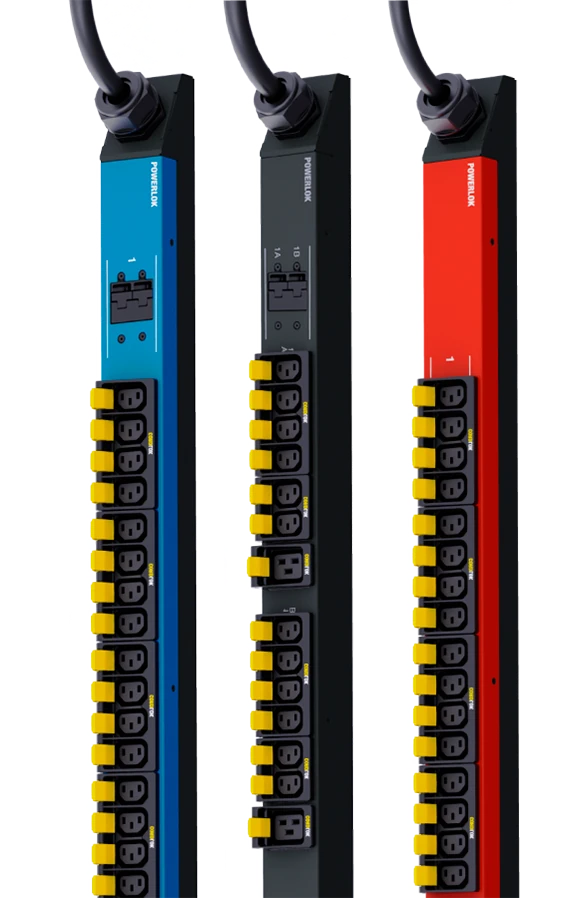 With automated soldering from line input to each receptacle,
PowerLok® eliminates all mechanical connections, making it 270%
less likely to fail than rack PDUs with mechanical terminations.
Setting the standard for rack power reliability.
With automated soldering from line input to each receptacle,
PowerLok® eliminates all mechanical connections, making it 270%
less likely to fail than rack PDUs with mechanical terminations.

Drew Robb
Writing and Editing Consultant and Contractor
0 Comments