
What is Going on with Rack Density?17 min read

The recently released AFCOM State of the Data Center Report 2026 highlighted a dramatic surge in rack density over the past year – from 16 kW per rack in 2025 to 27 kW per rack in 2026. This may not seem like much. However, an almost doubling of rack density in one year and a nearly 4x rise in three years signals a step change for the industry.
“Rack density rocketed up the past year as the industry raced to meet demand for AI and high-performance computing,” said Bill Kleyman, Executive Chair, Data Center Programs, AFCOM/Informa and CEO and CO-Founder, Apolo.us.
GPUs versus Traditional Data Centers
If you listen to the hype from the hyperscalers and Nvidia, the average data center is rapidly heading toward 1 MW per rack and “everyone” is adopting massive new servers packed full of graphics processing units (GPUs). This may be the case for a select few hyperscale “AI factories” under development and some other large facilities. But it is not the case in the average data center.
The AFCOM report offers real perspective on what is going on with the typical facility. Its membership base is made up of traditional data centers – those who deal with the day-to-day demands of IT. Many of them are thinking about GPUs or gradually introducing them. But their regular traffic remains their bread and butter. As a result, these AFCOM numbers act as a reality check on those cited by analysts, hyperscalers, and vendors with a vested interest in the biggest and newest chips.
According to AFCOM, average rack density was only 7 kW in 2021. It rose to 8.5 kW per rack in 2023, 12 kW in 2024, and 16 kW in 2025. Back in 2022, talk started to emerge about 100 kW racks. But the industry has been slow to respond. However, the massive jump in the 2026 survey to 27 kW per rack indicates that traditional data centers are now on board with industry transformation.
“This clearly illustrates how quickly AI and high-performance workloads are reshaping data center design assumptions,” said Kleyman.
Further, 69% of respondents to the AFCOM survey expect rack density to increase steadily over the next 12–36 months. They state that they are already taking active steps to increase density within their environments.
Data Center Megatrend
Data centers have experienced several major shifts over the past half century. The big ones included the transition from mainframes to microcomputers to PCs, the advent of cloud computing and virtualization, and now the arrival of GPUs and AI. Each time, data center architectures have markedly changed. The old gave way to the new.
This doesn’t mean that 5 kW racks and traditional data centers will go away overnight. Some may remain. But many will transition to higher densities. Some will target the high end which is predicted to eventually mean 1 MW per rack. Expect, then, in the coming years for the AFCOM numbers on rack density to reflect this. In the 2027 report, we might see averages approaching 40 kW. By the end of the decade, 100 kW could become the average. What that will mean in reality is a lot of data centers in the 10 kW to 50 kW range and a smaller number of massive facilities in the 1 MW range.
Power and Cooling Implications
With these pressures in mind, organizations are rethinking cooling strategies, power resilience, and infrastructure design. They are adopting liquid cooling technologies, improving airflow management, and investing in monitoring and sensing technologies to gain tighter control over thermal and power conditions.
“The operational implications of such a leap in rack density are significant. Many organizations are being pushed to extract more capacity from constrained footprints, placing added strain on cooling systems, power delivery, and operational processes,” said Kleyman. “In response, they’re accelerating investments in advanced cooling architectures, higher capacity power infrastructure, and smarter capacity management tools.”
According to the AFCOM survey, 49% are engaged in improving airflow management. While they want to introduce liquid cooling, they understand the need for continued optimization of traditional cooling strategies. Expect, therefore, more attention to be paid to poor ducting, misplaced floor tiles, missing blanking panels, and locations where hot air is being allowed to mix with cool air due to a lack of grommets and containment solutions. These fundamentals will become even more important in the GPU/AI/1 MW rack era.
Yes, liquid cooling is vital. But with data center investment dollars increasing by an order of magnitude, it is more imperative than ever to ensure that cool air goes where it is needed and hot air is channeled away efficiently.
Setting the standard for rack power reliability.
With automated soldering from line input to each receptacle,
PowerLok® eliminates all mechanical connections, making it 270%
less likely to fail than rack PDUs with mechanical terminations.
Setting the standard for rack power reliability.
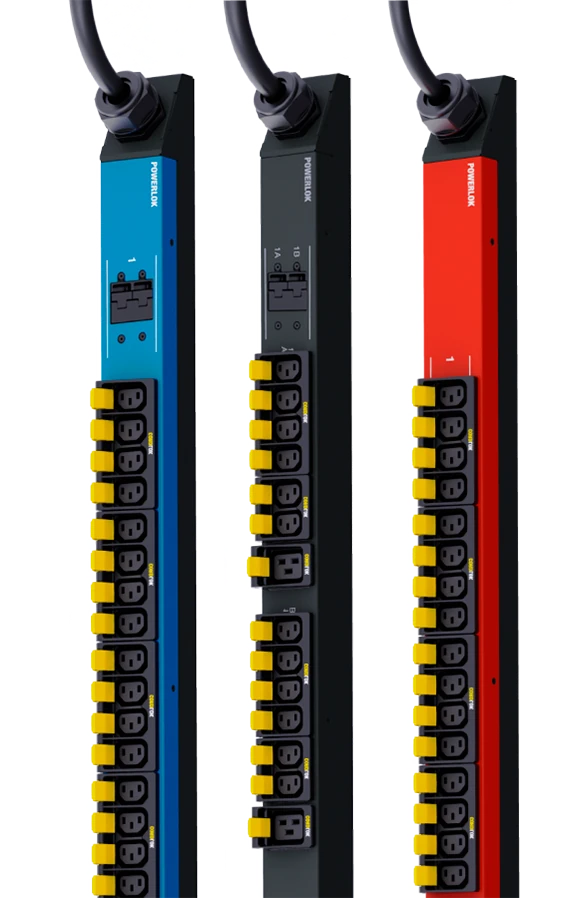 With automated soldering from line input to each receptacle,
PowerLok® eliminates all mechanical connections, making it 270%
less likely to fail than rack PDUs with mechanical terminations.

Drew Robb
Writing and Editing Consultant and Contractor
0 Comments